
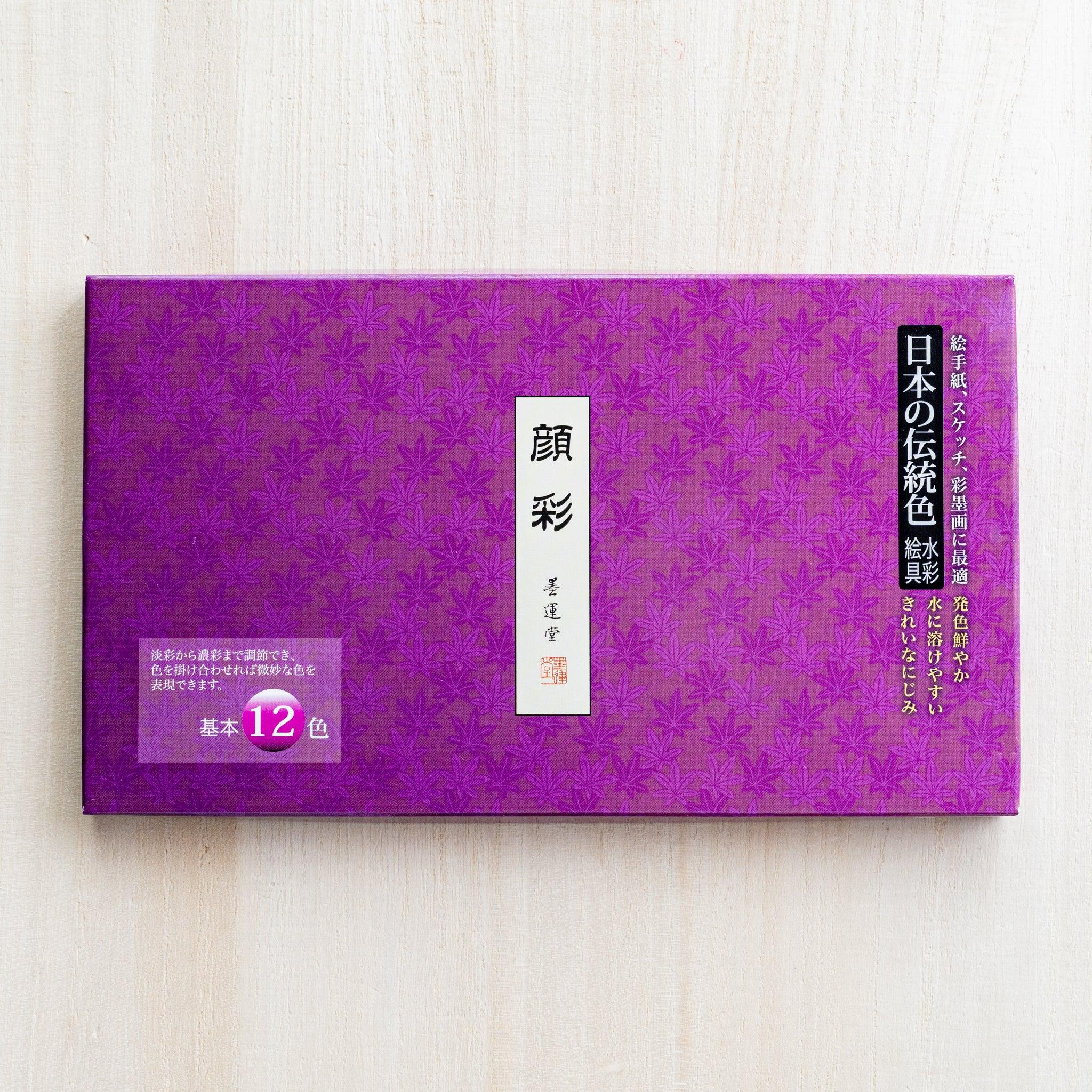
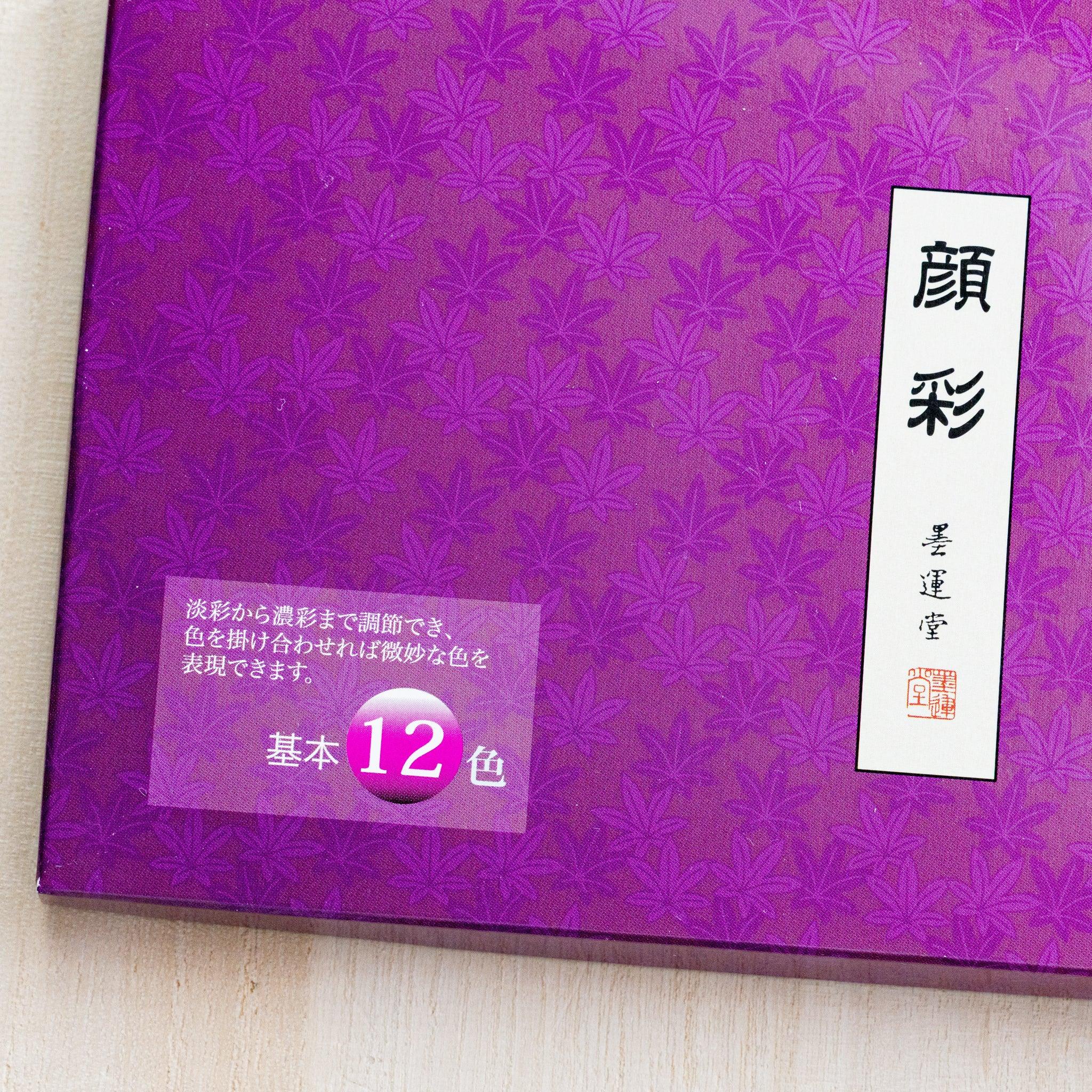
Boku-Undo Gansai Traditional Japanese Watercolor Paints (12 Colors)
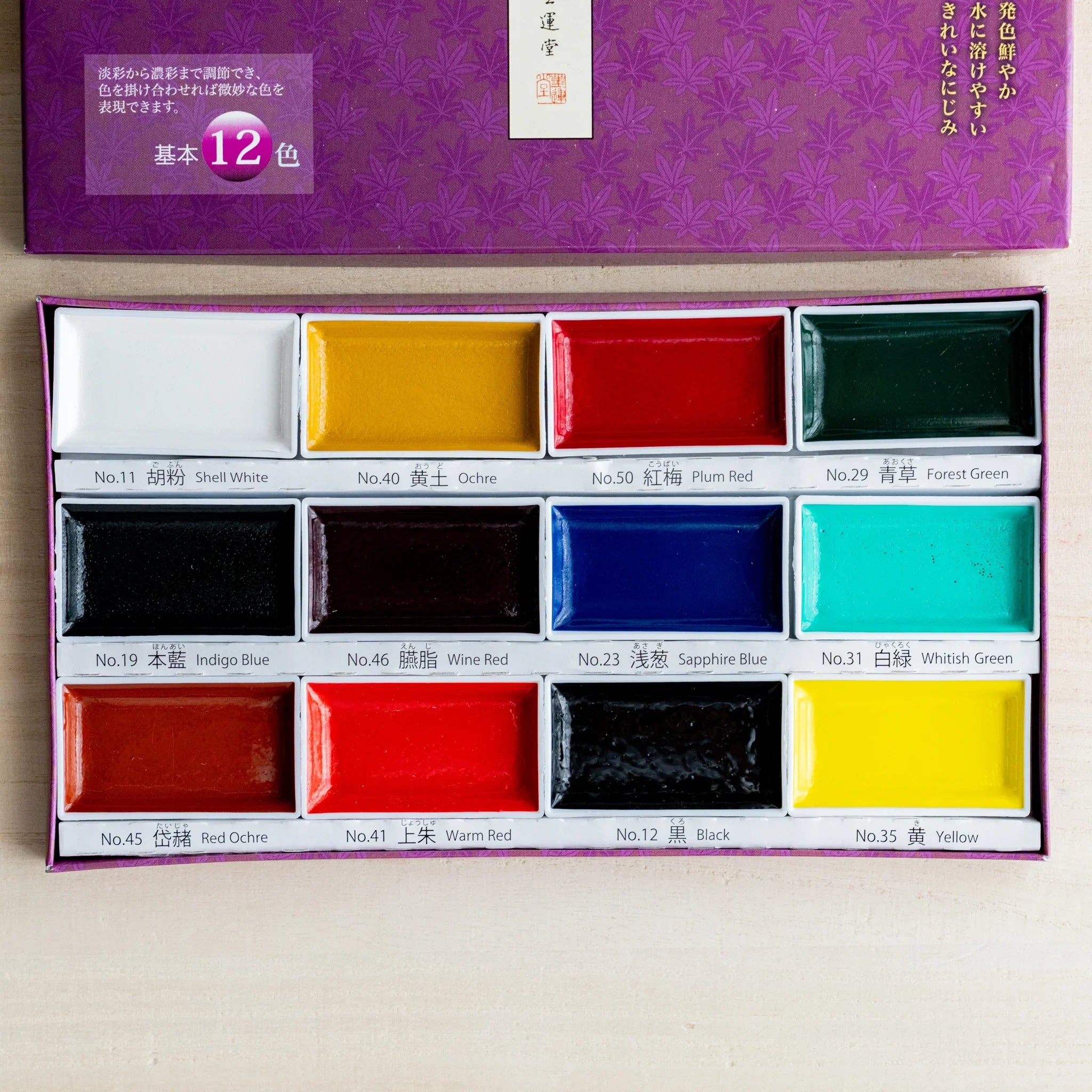
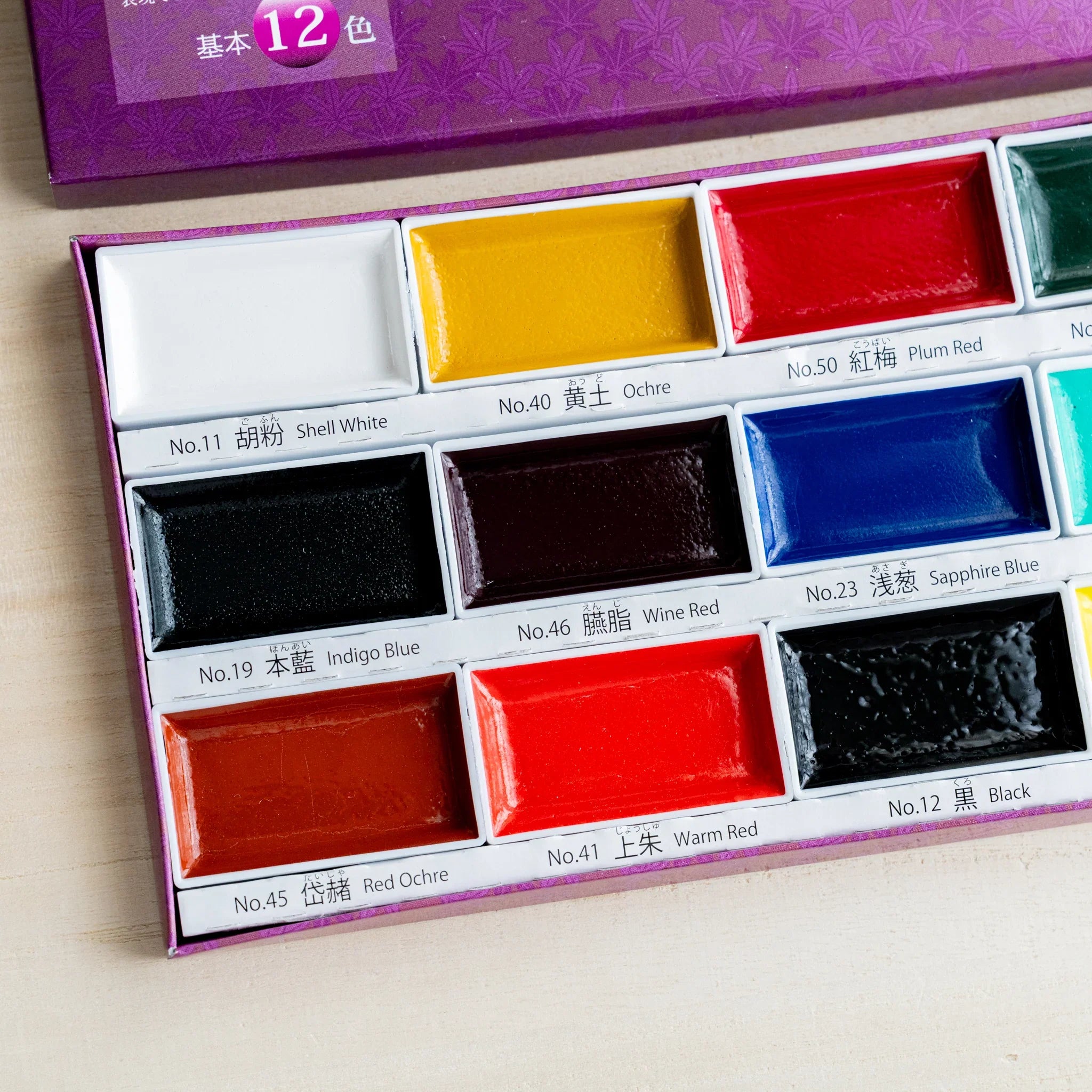
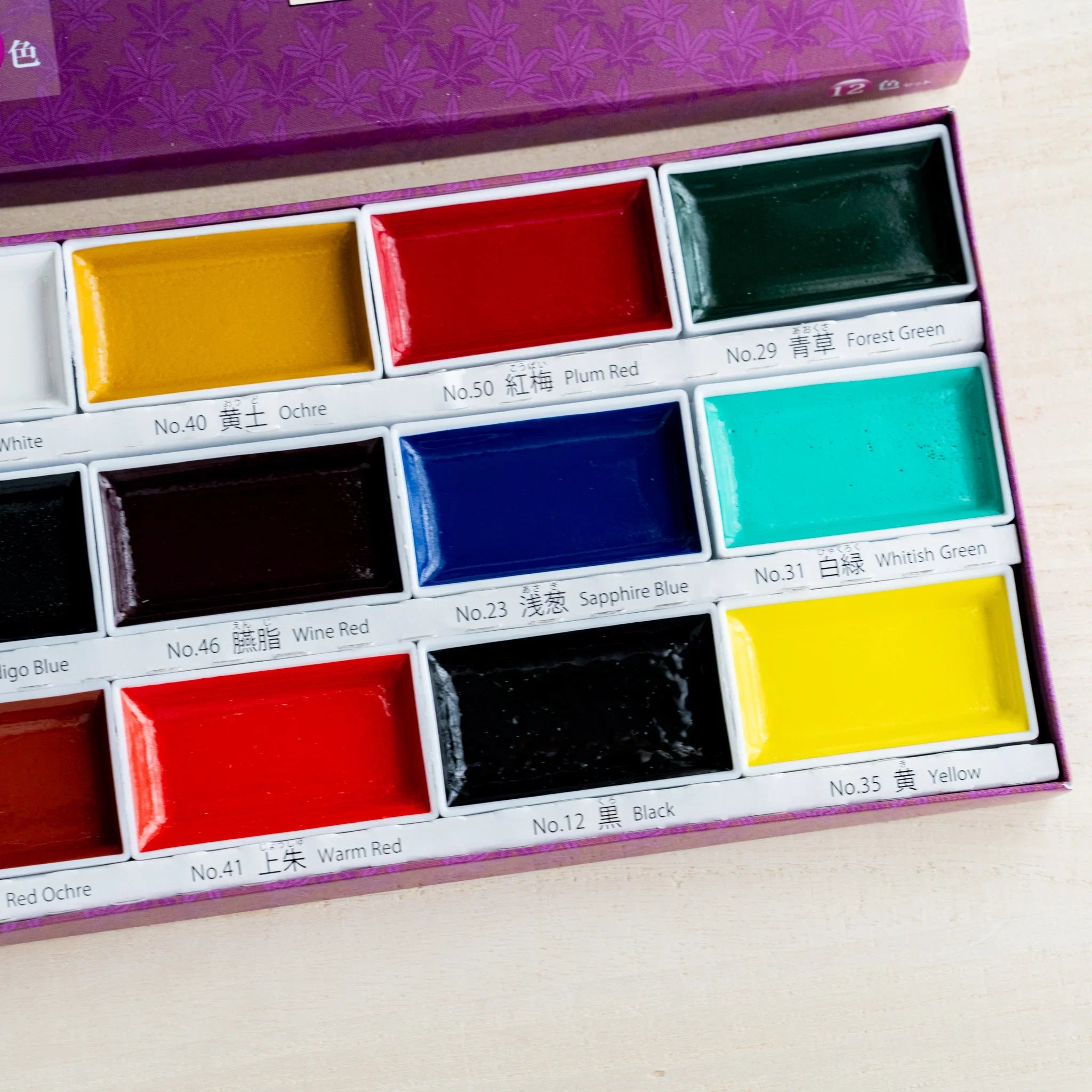
Boku-Undo Gansai Traditional Japanese Watercolor Paints in the 12-color starter set is the recommended entry point into traditional Japanese pan watercolors, made in Nara by a sumi manufacturer founded in 1805. The twelve pans cover the core color groups that anyone learning gansai needs first: white, black, and the primary reds, ochres, blues, greens, and yellow from which most other tones can be mixed. Gansai is the pan watercolor format used for etegami (Japanese picture letters), color accents in sumi-e and saibokuga (colored sumi painting), and Japanese-style sketching on washi.
The pans re-wet instantly when touched with a wet brush, and the color load is high enough to give vivid masstones with very little water. For a beginner this is a forgiving setup: there is no grinding, no mixing on a separate slab, and no time spent rehydrating sticks before painting. Open the box, dip a brush, and you are working.
The color names come from Nihon no Dentōshoku, the traditional Japanese color vocabulary that names each tone after a familiar plant, mineral, or natural scene rather than a generic hue. Learning the colors is also learning a slice of that language. The pigments are bound in gum arabic, the same binder used in most modern pan watercolors, but dry to the matte, slightly chalky finish of classical Japanese paint.
Boku-Undo has made sumi in Nara since 1805 and added the Gansai line to give beginners and amateur painters an approachable starting point in the same tradition. The 12-color set pairs naturally with sumi: a small, clear palette that lets you add color accents to ink drawings without overwhelming the brushwork. Use it on washi for the most authentic feel, or on standard watercolor paper if that is what you have.
For a wider palette, see the 18-color and 24-color sets in the same line. For a darker, sumi-grounded alternative, see the Sumi Ink Watercolor Paints — Shadow Black set. The pans pair naturally with the Akashiya Sai Water Brush Pen for travel sketching.
How to Use
- Wet a brush with clean water.
- Touch the brush to a pan to load color. A quick dip gives a transparent wash; pressing longer builds toward an opaque masstone.
- Paint directly on washi or watercolor paper, or mix two pans in a separate dish for in-between tones. Two adjacent washes will bleed softly into each other.
- Rinse the brush between colors. The pans rewet cleanly even after months of sitting closed.
Details
- Set contents: 12 dry watercolor pans in traditional Japanese colors
- Weight: 5.4 oz (154 g)
- Materials: pigments
- Origin: Made in Nara, Japan
- Brand: Boku-Undo
The Story of Boku-Undo
Founded in 1805 in Nara, a city that has produced Japanese ink for roughly thirteen hundred years, Boku-Undo has spent more than two centuries refining sumi for calligraphers, painters, and schools. The workshop still produces traditional ink sticks that are ground by hand on inkstones, but it also experiments steadily at the edges of that tradition: liquid sumi for brush painting, pan-format watercolors with sumi-grounded color, and these traditional gansai sets in the modern Japanese pan watercolor tradition.
What stays constant across every Boku-Undo product is the company's relationship with carbon and pigment. Whether it is a sumi stick, a sumi-grounded color watercolor, or a vivid gansai pan, the goal is the same: a paint that holds depth and opacity without losing the airy quality of Japanese paper. The Gansai line is Boku-Undo's continuation of that craft in the language of traditional Japanese color.
SHIPPING
Most items will be delivered within 3-5 working days of order confirmation, with international shipping available to customers worldwide.
*FREE SHIPPING on purchases over USD 200.
*Shipping costs will be displayed when you add items to your cart.
REFUND
You can return any products you buy from Komorebi Stationery within 30 days of delivery.
Please be assured that we will cover the return shipping costs if the products are defective or damaged. Otherwise, you will have to pay for the return shipping.
Choose options